Interview with Mark Strand
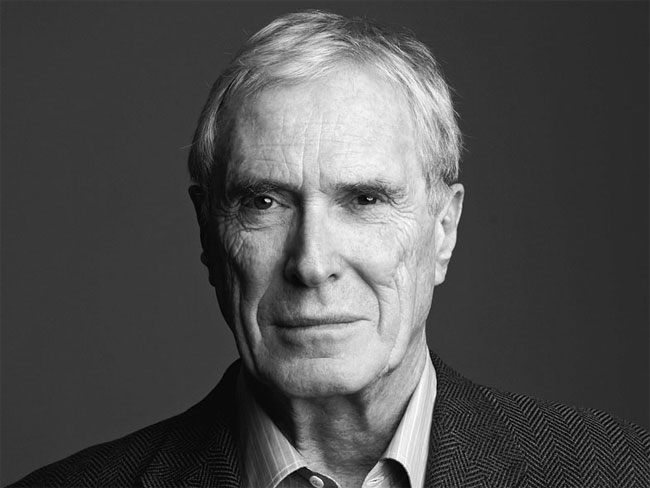
There is a particular feeling of reverence and fear I get when in the presence of greatness. When Mark Strand entered the Grand Salon at the American University of Paris, I felt something inside of me change.
Born on Prince Edward Island in 1934 and raised in the United States, Strand stands tall, noble; he has the crooked good-looks of Clint Eastwood. American Poet Laureate, winner of the Pulitzer and numerous other awards, author of eighteen poetry collections, twelve prose collections, and translator of six works, Strand’s greatness is absolute.
I had the opportunity to ask him a few questions after he read from Almost Invisible, his most recent collection of short prose (definitely not poems, as he says) at the American University.
– Harriet Alida Lye
Strand’s poems resonate with a shimmering sense of the infinite that befits his stature…His apparently simple lines have the eerie, seductive ring of the inevitable – New York Times Book Review
Q: How do you begin to work?
MS: Well, I can be reading something and a word pops out and it sets off a chain of other words. Sometimes I’ll get an idea while walking down the street and by the time I get home I’ve forgotten it. But then three days later it’s back. But a lot of times I forget. I should keep a little notebook and write things down.
I wrote this book very quickly, unlike my other books. I wrote it in eight months, and I threw away some of the stuff I wrote. I was in Italy sitting in the sun and I would go out with a book to read, and I had a notebook, and I’d sit there and put the book I was reading away and just start writing. Sometimes, if I was reading Henry James, which I was, I would begin with trying to write an imitation Jamesian sentence. If I read Kafka, which I always do, I would try to write a Kafkaesque sentence. But generally, ideas come to me anytime. I don’t need stimulants. Stimulants are a bad idea. It was a good idea forty-five, fifty years ago. It’s not a good idea anymore.
Q: You’re from Prince Edward Island but have lived in America for a long time; I’m wondering how your Canadian identity plays into your identity as a writer, if you feel a kinship with Canadian writers and the Canadian landscape, and if that has a role in your work?
MS: Hm. Well, I was born in Canada of American parents, and we left Canada just before I was five years old. So I can’t really call myself a Canadian except by birth. Well, although all my summers until my early teens were spent in Nova Scotia, where my aunt had a house, and that landscape has formed the landscape of a great many of my poems. You know, the sea, trees. I mean whenever I create a landscape it’s there. Then I moved to Utah where I lived for a dozen years, and the sea was replaced by mountains.
The Canadians are, perhaps, rather more nationalistic about their literature, but that’s because there’s this huge Colossus to the south that invades their Canadian identity at every turn, at every instant. I mean the TV programs, the books, the clothing, the cars, the stuff you buy in the supermarket, it’s American, you know, I mean, you want to preserve a little something for yourself. I don’t think it’s a silly thing, I think people can spend too much energy trying to establish a national identity when the big thing is having been born in the first place. I mean, which country you were born in doesn’t seem so important, unless, you know, it’s Syria or Rwanda, then you have bad luck. But to be born in a Western democracy is good luck I think.
Q: You’re insistent on calling this new collection a series of prose pieces as opposed to poems – why?
MS: Because I don’t want to be writing poems. If I thought they were poems, I wouldn’t have written them. It’s a bit of, I mean, it’s purposeful self-deception. See, I just find it so hard to write poems that I, and I fail so often, that I just don’t want to keep doing that…‘til I feel that I’m a god again, and can write a decent poem. I’m kidding. You don’t have to feel like a god, but, I just – writing a really good poem is hard. The older you get the harder it is because you get, you develop a feeling that whatever I had to say I’ve said, you know, at least that way.
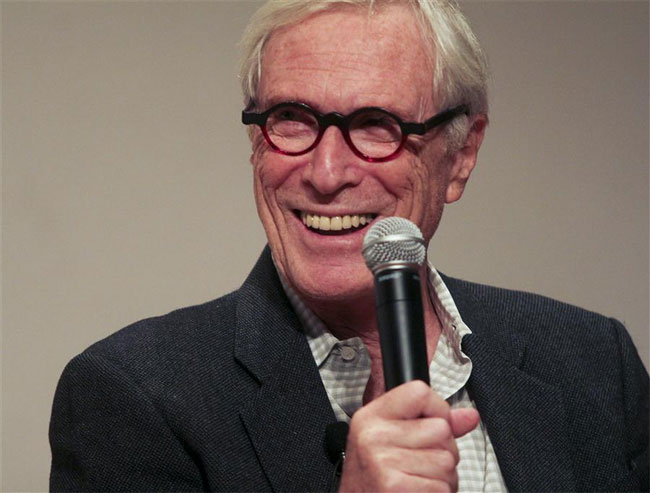
Q: Painting has been a big part of your life – you started out painting, and you still do visual arts. Could you speak a little bit about the relationship between painting and writing?
MS: Well, there must be a relationship because I do both. But I feel a different part of me operates in the one that doesn’t operate in the other. I mean, a verbal intelligence is one thing, and a visual intelligence is another, and I think that, for me, making visual collages or drawing is an escape from having to manifest in language something that I didn’t know I had in me, or something that I didn’t know I wanted to say. I don’t have to say “Now I’m going to put the green next to the blue, and I’m going to move the yellow over here,” it sort of happens, you don’t talk to yourself that way, you don’t rationalize in the same way. I mean, you don’t talk to yourself when you’re writing, but you chant your lines to yourself, you know, you say, no the definite article is wrong here, I need the indefinite article, or I need a longer syllable here. This is too short, this syllable. You know. And you can do other things when you make visual art, you can listen to music: you can listen to somebody giving a lecture, while you’re pushing colors around. You can’t do that when you’re writing. It’s a different part of the mind. Even writing prose is different from writing poetry. When I write a lecture I have to figure out what it is that I’m saying, where the lecture is going. When I write a poem, I don’t know where I’m going. And that’s the kick. Where is this gonna end up? You know, and then you know it’s going in the wrong direction, so you have to pull back and go in the other direction. When you’re writing prose, you sort of know. This is where I’m going. I’ve got to make this point, this point, this point.
Q: There’s a line from your poem “The Night, The Porch” in the collection Blizzard of One that I feel like could be a preface, or included in this collection. It goes “To stare at nothing is to learn by heart/ What all of us will be swept into…”
MS: Oh yeah, I know that line.
Q: It seems that you’re working through the theme of invisibility and disappearing in a lot of your work – this new collection, Almost Invisible – and I’m wondering if you could talk about that theme?
MS: I think we all work through it in our lives, because each of us knows someday we’re going to die, we’ll be invisible. None of us believes he or she is immortal. But it’s… I mean, it’s, in some ways it’s the one experience we have that we have too late to write about, our final disappearance, you know, so it’s fodder for speculation.
Q: So “nothing” for you in that line is death?
MS: Yeah, I mean, I don’t find death frightening. I find lingering illness a frightening prospect. I find losing my mind… maybe you think I’m losing my mind already, but I don’t think it’s happened yet. I find that a dismal prospect, but if nobody died, the world would be so overcrowded. We’d be living in such squalor. There wouldn’t be enough food to go around. We’d have all these contagious diseases. It would be horrible. Just think, instead of six billion, we would be a hundred billion, maybe. Imagine that. Imagine shopping.

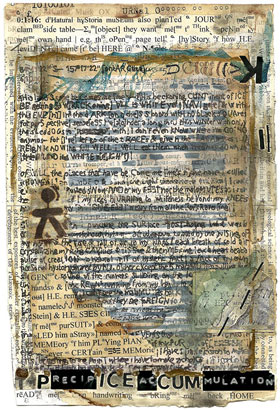 If one can do this, each word becomes liberated to lead down paths towards other words and ideas. For example, is “dicebat” a reference to the Latin for speaking, or is it a mythical creature? Is the usage of H.E. supposed to guide one from Homo Erectus to the pronoun “he” to the collective “we” so that one moves from man the species, to man the sex, to man as in humankind? Is Jacques Londres just weird or is there a reason why Jack London’s French alter ego appears? Are the bird bytes the two birds that Noah sent out to ascertain that the flood was over? Everything here refuses to let one coast: by taking away what we would normally refer to as plot, this project compels us to stay with each unit of language, without once giving us the satisfaction of definite knowledge.