The Passive Collective

by HRM on February 28, 2012

"Become an inactivist today (or whenever you feel so inclined)"

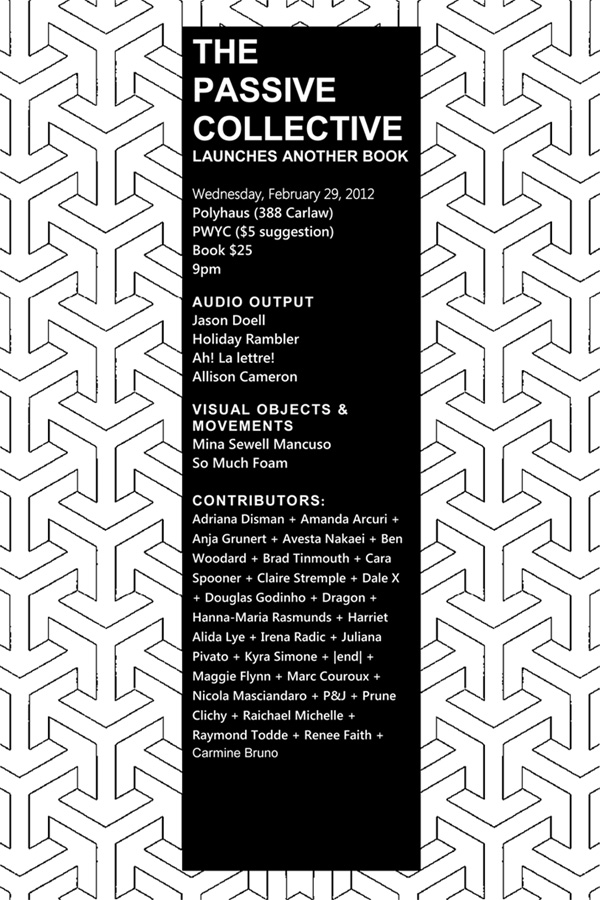
I first met Lendl Barcelos by the fountain in the Place Saint Sulpice. This is the same square that Perec exhausts in his book Tentative d’épuisement d’un lieu Parisien, but this is not important. Lendl is one of the team behind the Passive Collective, launching its second issue tomorrow, on the leap day (“for esoteric reasons,” he tells me), at the Polyhaus in Toronto.

– Harriet Alida Lye

What/who is the Passive Collective?

The Passive Collective is a way of organizing. It has no members.

How did it form, what was the seed that germinated the idea?

There was a cork-board where an activist roommate would pin various forms of activist propaganda. One day a poster was produced in the same vein bearing the slogan “Become an inactivist today (or whenever
you feel so inclined).” Months passed and the concept began to ferment; The Passive Collective wished to be self-actualized. Broadsides were posted in Milan and in Brooklyn. During the the same period, a great deal of art (text, visual, and other) was being produced, begging dissemination. Incidentally, much of it was being created at very low visibility (a dusty sketchbook in someone’s room, ideas yet to be penned but spoken, etc.). The idea of a group with nothing to gather around seemed an effective principle for the wider broadcast of these disparate expressions, so a book (and now, a subsequent book) was created.

Why do you think it’s important or interesting to publish book-magazines?

Physical books are important because they have a scent and they register the traces of their readers (dust, stains, marginalia, pressed leaves, old receipts, etc.). Producing books is not only a way of sharing an object and the creators of that object with others, it is a way of defining an experience/experiment with the reader.

What, if any, is the significance of “collectivity” in art?

Collectivity is one of the most important aspects of art. Even an art-object that is hermetically made, buried, and left to rot without another person being involved in its production (however that is possible) can be discussed as a counter-example of collectivity and become, at least conceptually, a node to collect around. It is a clichéd notion, but many of the greatest artists and art came about through some sort of collective experience.

What are you inspired by right now?

Pierre Mac Orlan, Islamic design, conversations with intractable tangents, Toronto (especially Alexandra Mackenzie and L CON), boredom, and complex ideas put simply.

{ 0 comments }

Interview with Topher Dawson
Map of the North of Scotland from 1805

Map of the North of Scotland from 1805

Topher Dawson

Topher seated by boat

I became an honourary member of the Suetude Society on a fortuitous, albeit slightly random, trip to Scotland. A week before leaving, I activated my dormant CouchSurfing account: it was through this that I met the Secretary and founding member of the Society: Topher Dawson, and his lovely family.

The Suetude Society has its headquarters in Ullapool, a town of 1300 people nestled in the lochs and rugged mountains of the Scottish Highlands. The Society was started by Topher and his friend Alan Bush. Topher is a boat-builder, Alan a weaver. Both like “playing with words,” explains Topher, and they founded the Society because “the idea of rehabilitating neglected words or habilitating new ones” appealed to them.

Here, Topher Dawson explains what the Suetude Society is, discusses the “democratic view that a language belongs to its speakers,” and tells you how to become a member of this in/advertently esoteric society.

– Harriet Alida Lye


“A STATE OF BUSY USEFULNESS”

“Desuetude means disuse or obsolescence, and by discarding the negative prefix de- we came up with suetude, a state of busy usefulness, which is our vision for all the old, new, or new/old words in our list. What I like about the words is that many, having cast off the negative baggage of their prefix, become short, positive and happy. I offer ceitful, dain, ept and dolent as examples.

It runs out that some words are actually archaic words brought back from the brink, like maculate (spotty), nocuous (from noxious), advertent.

Ullapool

Some are what the Chambers Dictionary call “facetious back formations” which don’t really exist but which we would like to introduce. There are two possible views of what are “proper” words; one is that they are not admissible to the language until some authority decides so, and the democratic view that a language belongs to its speakers. I think that any speaker should be able, consciously or unconsciously, to coin or habilitate a word, nurse it through its childhood, and launch it as a full citizen in the world of words.

Alan has a more radical view and has put forward words like ciple, one who does not have a guru, and miss, which already has a meaning. My particular favourites are podean (from antipodean meaning one who lives on the opposite side of the globe) (Alan being only 10 miles away is a podean of mine), and lexic.

Ullapool

Members of the Society are, we hope, lexic, norant, mented, ebriated and cadent. Our noble enterprise is nominious, petuous, ruly and astrous. We seek to bunk the idea that ordinary people can mantle words, and pute with each other over the admission of words to the list.

There is no formal list of members but I would guess about 20 people have contributed to our current list.

Any further candidate words which readers may wish to surrect will be accepted with tagonistic paragement.”

Ullapool

All photos by photo by Harriet Alida Lye

{ 0 comments }

The Body Electric in Berlin

by HRM on February 16, 2012

Seeing Naldjorlak and One Pig

by Lacey Haynes

If you find yourself dismissing electronic music as a medium perpetrating the demise of real music – as a genre that relies wholeheartedly on a MacBook and a Synth – may this enlighten you to the broad and varied scope that is the electronic genre.

At a special performance of Éliane Radigue’s Naldjorlak, performed live by the three musicians enlisted for the project’s original debut performance five and seven years back, Radigue was in attendance and just days shy of her eightieth birthday. Eight days later and half the age of Radigue, Matthew Herbert visited the same Hebbel am Ufer theatre in Berlin, presenting his One Pig show to a similarly sold-out theatre. While Radigue employed one cello and two basset horns for her minimalistic and restrained show, Herbert enlisted multiple laptops, various instruments and buttons, along with four other men and a specially constructed pig sty shaped string instrument.

THE COMPOSERS

Eliane Radigue

Éliane Radigue (France, 1932) is an electronic music composer who began creating in the 1950s. She was known for using almost exclusively a single APR 2500 synthesizer for most of her compositions until 2001 when she began composing for acoustic instruments. Her music is reminiscent of Tibetan Buddhist philosophy, which she started to explore early on in her musical career.  She consistently creates arrangements that abide by a slow and decisive unfolding of sounds and textures.

Matthew Herbert (Britain, 1972) is an electronic music composer who has been a pioneer in the use of real and ordinary sounds in his music production. In his first performance in the mid-90s, he allegedly used a bag of potato chips as an instrument. He is a politically charged musician and in his manifesto from 2000, he imposed a ban on himself from using pre-existing samples and drum machines in his compositions, stressing that anything he created in the studio would be replicable on stage.

THE SHOWS
Radigue’s Naldjorlak,
a meditative and careful production, opened the Spectral Music Festival in Berlin – a festival exploring experimental and haunting creations from international artists. The show was an extremely special affair, not only with Radigue in attendance but also with Charles Curtis, Carole Robinson and Bruno Martinez performing the three parts of the composition which were crafted between 2005 and 2007. Radigue, who can be seen in internet videos sitting at a massive machine, carefully turning knobs and adjusting levels, explores the heightened awareness that is created with long droning sounds and subtle shifts in frequency.
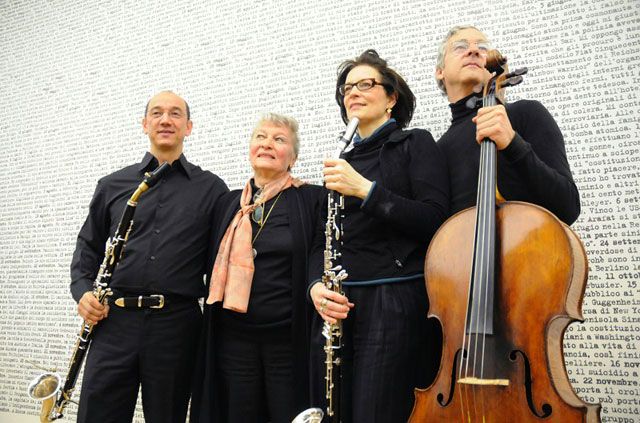
The Naldjorlak team

The first portion of Naldjorlak saw the solitary cellist, Charles Curtis, backlit on stage, playing languorous notes for the better part of thirty minutes. Not only did he play the strings, but by the end of his performance, he had the cello cradled in his lap, while he dragged the bow along the metal stand that supports the instrument’s body. This was not a performance for everyone. The intensity was palpable as the quiet shifts in seats and timid scratches of legs became magnified beyond belief. That perverse feeling to do the opposite of what you are supposed to do overtook two of my neighbors who began laughing uncontrollably when Curtis played the cello’s stand. They were consequently scolded by another spectator during the intermission, upon which they left and did not return.

In the second portion of the show, the basset horn players, Carole Robinson and Bruno Martinez, blew long repetitive sounds, during an extremely abstract duet. Intermittently, Martinez would slowly rock in circles, shifting the direction of his instrument. The piece created such a heightened auditory awareness that even the most subtle shifts in the instrument’s location transformed the shape of the sound sweeping through the space.  The show concluded when all three musicians came together on stage, creating a culmination of sounds and layers that had many members of the audience on their feet clapping as the performance closed.

Herbert’s One Pig was perhaps the exact opposite experience. It was extremely provocative, wild and unrestrained, while managing to be equally enthralling. Five musicians, including Herbert, wore white lab coats, all facing a large pig sty shaped instrument, made with red strings and multiple crank mechanisms.
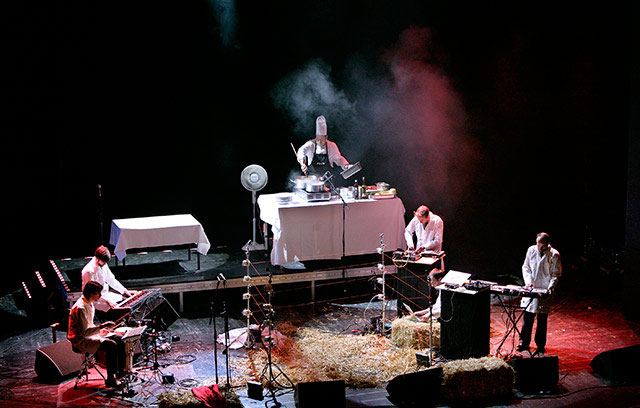
One Pig live

The show follows the life of a pig, from birth to death to consumption. One of the musicians represented the pig and he played the pig sty instrument, standing in hay, as he changed lab coats periodically to track the passing months.  One Pig is actually the result of Herbert tracking a singular pig’s life – the pig’s noises, its death, the blood being drained from its body, and as well, the body being cut apart and then consumed. Herbert even partook in the eating of said pig and subsequently used the pig’s body to create instruments for the live show. Needless to say, he has received harsh criticism from animal rights activists like PETA claiming that the show is a cruel and unnecessary objectification of the murdered animal. Herbert claims that the show in fact honors the animal’s life – a life that would normally have never been acknowledged and instead forgotten about after the animal was sold for its meat and consumed.

recording the pig's noises

After the pig’s death is represented, a chef came onto the stage where an entire cooking station was set-up. The chef then proceeded to cook what appeared to be Spaghetti Carbonara, while the musicians continued to play, accompanied by the sounds of food being cooked live while the aromas wafted through the theatre. The chef completed the meal after which the musicians took the plates to a table, the lights dimmed and then Matthew Herbert sang a sweet, down-home kind of tune. It was the only song that included live vocals – a performance that stood in opposition to the mostly unruly and loud performance that had come before. In the song, Herbert crooned that “the simple life is all we need” then an audio recording of people eating the pig played as the musicians in white lab coats stood motionless. The musicians then left the stage, whereupon one returned to serve the plates of freshly cooked food to audience members.

WITH YOUR EYE TO THE LOOKING GLASS
Common ground
may seem an implausible place to arrive at between these two pieces. Firstly, Radigue’s show was simplistic – three people playing instruments, while Herbert’s was entirely techy, with cords and speakers and electronics populating the stage. In the divergent space between Naldjorlak and One Pig, the shows somehow seemed perfectly placed chronologically here in Berlin –with the contemplative experience of Naldjorlak followed by the boisterous realization that was One Pig. It was as informative as night is to day, insofar as you need to be able to reference one to understand the other.

I left Radigue’s show feeling impossibly satisfied. Naldjorlak doesn’t come to an expected audible climax – it maintains and shifts gently, but doesn’t really go anywhere large. It just exists. To have a theatre full of people, sitting in silence, observing something so unimaginably restrained and languorous elucidated itself as a completely necessary happening. Amidst our lives that ebb and flow, between expectations of grandeur, high-highs and low-lows, it was beautiful to be presented with something that relished the moment. It showed the path as the thing that is of the utmost importance instead of the destination. In a world perpetually inundated with noise and spectacle, this was a reprieve and a reminder that subtle transformations are extremely potent when we are connected and aware of what is actually happening. It is like being tuned into a frequency on the radio – when you hit the sweet spot, you can hear what is being projected at you with perfect clarity.

On the other hand, I walked out of Herbert’s One Pig feeling elated. It required the same amount of concentration and awareness as Naldjorlak, but instead of feeling like I had to dive into it, it left the stage and came completely to meet me. It was loud and it was a spectacle, and it was also thoughtful and provocative. It was the antithesis of Naldjorlak in many ways, but it was born from something similar. The transitions were big and obvious, and the gestures sweeping, but it was about connection. For Herbert, it was about connecting to the life of an animal. For the audience, it was connecting to the unstructured soundscape in order to be transported to a place that lacked walls and ceilings. It was endlessly creative and alive, and it was phenomenal.
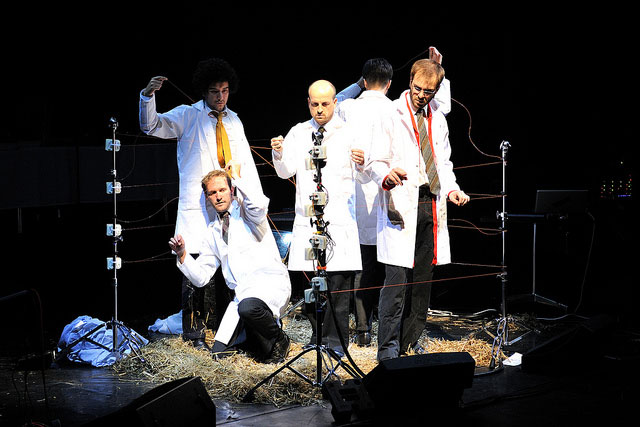
Inside the sty

ELECTRONIC IS HUMAN
It must all work together. Radigue’s Naldjorlak was performed solely with instruments yet it maintained so much of what she’s known for with her single ARP 2500 synth. The show harkened back to the mode of composition that she became recognized for in the 1970s: one woman, sitting at a huge machine, turning knobs meticulously, until the very sound in her head was presented before her. While One Pig, with its unique fusion of everyday sounds and human effort was the epitome of electronic music. It had all the electro-accoutrements, but amidst the music making gear, it maintained a sense of the ordinary, by taking unremarkable noises – pigs squealing, humans breathing – and transforming them into something fresh, and sometimes alarming and almost unrecognizable.

Both shows offered the audience a chance to meditate – a call to be emotionally altered through music, music that was neither melodic, nor harmonious or predictable. Unlike a pop song, these pieces were not easy to follow or decipher. They required a presence of body and mind, and the willingness to be fully submerged in noise – relinquishing one’s own thoughts, clearing the way for something new.
{ 0 comments }

A portion of an endless history

by HRM on February 10, 2012

A Conversation-Interview between Holiday Rambler and Lendl Barcelos

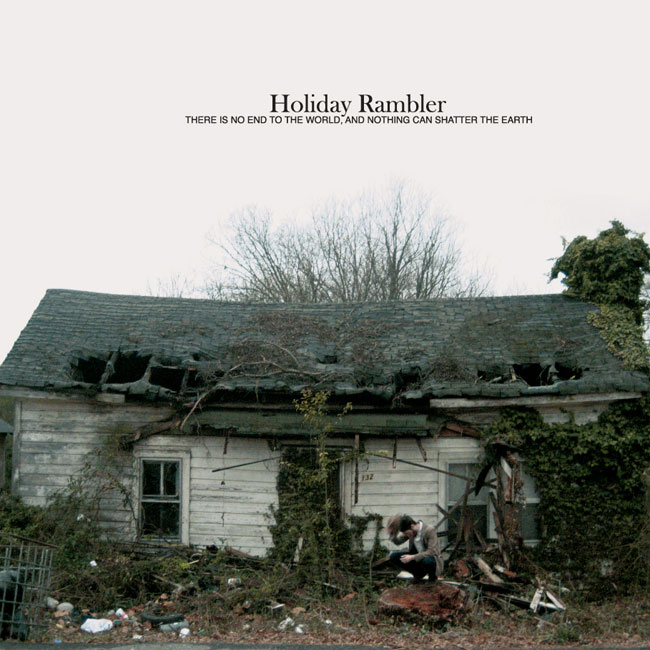
Holiday Rambler is the everyman that died long ago, the tradition your grandparents remembered, but your parents discarded. Utilizing no more than can be carried alone, he sings forgotten histories over vernacular guitar accompaniment. His debut LP There Is No End To The World, And Nothing Can Shatter The Earth is released on February 14.

Lendl Barcelos enjoys patterns, concepts, sounds, and movement. He lives in Toronto where he pretends that one can be a flâneur (and/or Situationist) outside of Paris (and London). It is said that he is involved with The Passive Collective.

L: Let’s start with the obvious, so the world doesn’t end and the earth doesn’t shatter, yet everything is in disaster?
HR: I do not know if things are in disaster. I believe the appearance of disaster is pervasive, but it always has been. People get wrapped up in the notion of disaster.

L: At the least, things are in decay.
HR: Well of course in decay, but decay is a self-renewing process, not a terminal one. I think it is important that people know that this is the case.

L: That’s really interesting.
HR: Yes. It is not apocalyptic, it is somewhat the opposite. Things will be alright.

L: Well the title is very positive, but the whole album is…
HR: It is not the end of the world and it was not earth-shattering; what could possibly be earth-shattering? It is a leveling of all things.

L: That’s fair. In the songs you or the characters in your songs—since it’s not just you—often refer to loss.
HR: It is just me. There are no characters in my songs. I mean, the songs are all first-person. There is no invention.

L: Though sometimes it’s not you who is speaking.
HR: Very rarely, I would say. That is all I have to go on. There is no other perspective I can realize.

L: Well, “I will do damage to foolish people,” that’s not you.
HR: Well, it is where I come from. It is easy to embody that and to accept it.

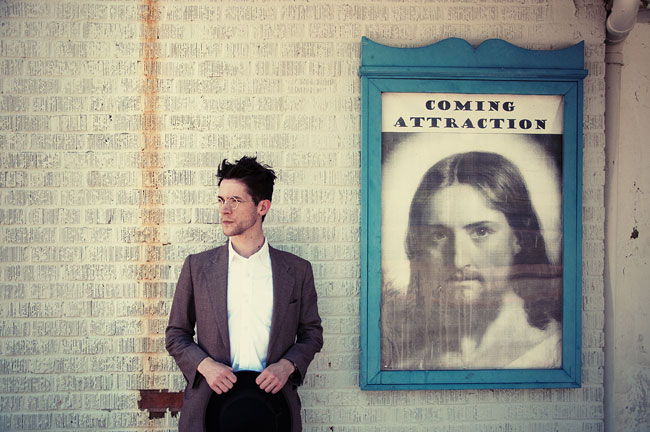
Coming Attraction

L: So it’s you becoming these different things, in a sense?
HR: Especially in that case, that is the voice of my grandfather so it is in acceptance of that and empathizing with that perspective, understanding what it is. It is a feeling felt personally that can be refracted historically in order to utilize it in the present. In one way or another I will do damage to foolish people.

L: I got that sense.
[they laugh]
HR: That is a very violent song. The intentions are extremely threatening. At a recent performance, I warned the audience that they were not being directly addressed. Do you know Michael Gira [of Swans]? He is very threatening. He is often directly threatening. It is an interesting position to take as a performer, especially when you are at their service.

L: But the audience are not the foolish people?
HR: Right. Well they would assume that they are not and in that they are safe.

L: A lot of the songs are located in the US (Centralia, California). They are very American, but you live in Canada?
HR: They are very regional. I do live in Canada. The perspective to be able to sing about those places objectively would not be had if I did not live here. The distance from something allows its observation. Living in that country [the US], I would be further away from accessing those things because they would be too close at hand. My identity as an American was nonexistent until I moved to Canada. It was essentially incidental to me when I was living there, maybe even distasteful to me, but now that I am here, I am understanding what it is about—even in its fractured, foolish, hubristic, disgusting providence. It is a foolish place. It is completely contradictory, incredibly hypocritical, but in the cracks of that foundation (and because of those cracks) the formative climate for things is very specific and particular. In Bill Callahan’s song ‘America!’ there’s a line: “everyone’s allowed a past they don’t care to mention/America! America!”

L: Haha…and you obviously identify with that.
HR: Oh certainly. I do not care to mention the past. I mean, I do not really care to mention anything too directly. It is interesting to try to impress upon people the important aspects of a situation in song without being completely prescriptive. I am not interested in really telling stories as much as establishing scenarios so that one might understand the feeling you get from the story anyhow. There are just more direct ways. The details of a thing are fairly incidental to how the situation unfolds, how it makes you feel, and what it impresses upon you.

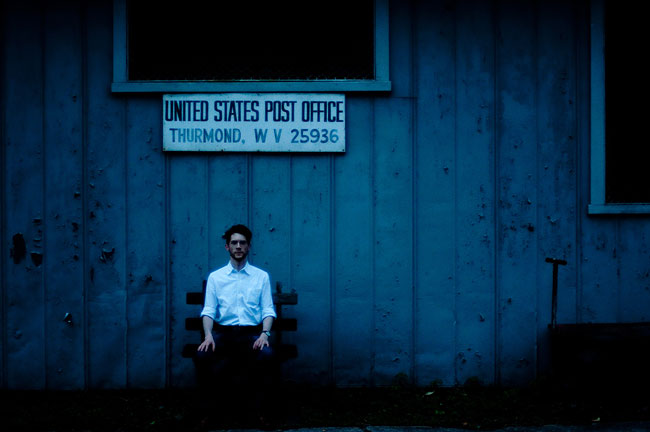
Post Office

L: The songs seem very personal…
HR: They have to be, you cannot start anywhere else.

L: Is there some distance between you and what’s being said in the music?
HR: No no, there is very little distance. There is no distance. It is so close at hand that it necessitates the becoming of a separate entity to sing it. You have to draft yourself into service as an intermediary in order to access those things that are so close to you, otherwise you cannot get them off, cannot brush them off, cannot even remove them from yourself.

L: That makes sense to me.
HR: There is a lot of loss. Someone told me there is a lot of death on the album and I thought that is very strange; it does not seem like that to me.

L: I have an obligatory musician question: When you want to dance, what gets you moving?
HR: African rhythms. Densely repetitive rhythms. That is how the playing is…well that is a stretch…but it is certainly repetitive. Small repetitions.

L: Well you can say that some of those rhythms came from Africa.
HR: I would say you would definitely have to. The Jali, the kora playing cultures, that is certainly a touchstone. It is beautiful endless music upon which any portion of an endless history can be expressed.

There Is No End To The World, And Nothing Can Shatter The Earth

{ 0 comments }

Modern society has 48 Gods

by HRM on February 2, 2012

Gerhard Richter’s portrait series at the Museum Ludwig

Gerhard Richter at the Museum Ludwig

When they turn 48, men apparently get over their mid-life crisis. Researchers recently found out that water freezes at 48 degrees and Hollywood actor Kiefer Sutherland had to spend 48 days in prison for being drunk while driving. There are 48 first Latin names in the Italian language and the head of a ram is generally 48 cm large.

48 is the magic number; 48 is a number like every other number. It is also the title of a series of Gerhard Richter’s portraits currently exhibited in the Museum Ludwig in his hometown of Cologne.

48 men, 48 personalities, 48 faces. It is a work Richter already made in 1972, all in black and white, based on the tiny pictures of an encyclopedia. All of the paintings are slightly blurry, like a photograph with too much light – it’s the typical style we associate with Richter’s earlier work.

When standing in front of all those eyes, those mouths and ears; when looking at the serious glances of those great men, you get the feeling of facing a frieze of 48 heroes. There is Franz Kafka and Oscar Wilde, there is Igor Strawinski, Albert Einstein, Giacomo Puccini. When you turn to your left you will look at Gustav Mahler, then you turn again and face Rainer Maria Rilke.

Franz Kafka by Gerhard Richter at the Museum Ludwig

Looking down at you, those men who shaped modernism in all its variations, they are overwhelming, they are breathtaking, they are intimidating. Those 48 Gods of Western civilization seem a little bit frozen in all their greyness, a little bit static in their uniform posture.

Are we meant to respect, to hesitate, to acknowledge, to awe or to fear? What is it telling us, this display of giants, of leviathans, of geniuses?

It is not a soothing or comforting impression they give. There are no women, there is no variation, no warmth. The faces remain distant and impersonal; they are great, they are grey, they are dead.

After all, it really is a frieze of heroes, of modern Gods.

{ 0 comments }

ISSN: 2116 34X