Dimanche Rouge

by HRM on September 15, 2011

Experimental performances

Dimanche Rouge

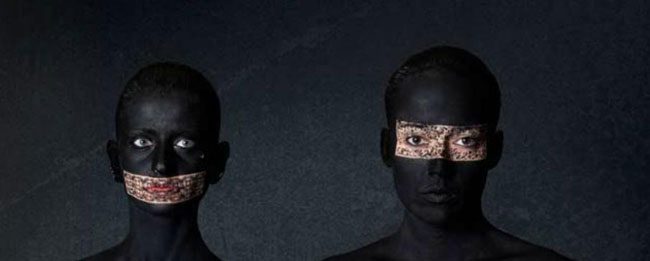
On Sunday, 18 September, the eighth installment of Dimanche Rouge will be held at Petit Bain, a floating concert hall and art space on the Seine. A mini-festival of experimental performances founded in Paris, Dimanche Rouge offers a consistent opportunity for artists to present their work. Founded by Opie Boero Imwinkelried less than a year ago, Dimanche Rouge has a variety of ambitious projects underway, including (launching just this month) a Saturday laboratories component that, through a network of local sponsors, will connect artists globally via Livestream the day before monthly performance. Imwinkelried asked me to curate a Her Royal Majesty reading series for September’s edition – come to see Paris Literary Prize winner Rosa Rankin Gee, Literary Death Match founder Todd Zuniga, and poet and author of The Golden Bristled-Boar Jeffrey Greene read from their work.

When asked about where the idea came from, Imwinkelried said “I started Dimanche Rouge because, from my own experience as an experimental performance artist, I learned that it was almost impossible to find a space in Paris to perform regularly. You had to either rent a venue from your own pocket or draw a fairly large public willing to pay to see your performance. Now, there is a space for experimental artists to perform in Paris every third Sunday of the month!”

Don’t be deterred by the word “experimental,” either – Imwinkelried explained that while it isn’t easy to define what makes a performance experimental, “one important aspect involves taking risks. When you work experimentally, you challenge the traditional cannons of expression. Dimanche Rouge wants maximum risk.”

Dimanche Rouge Logo

For details, please visit their website

{ 0 comments }

Illustrating Finnegans Wake

by HRM on September 9, 2011

Interview with Stephen Crowe

Finnegans Wake might be the single most neglected book in history by a major writer.

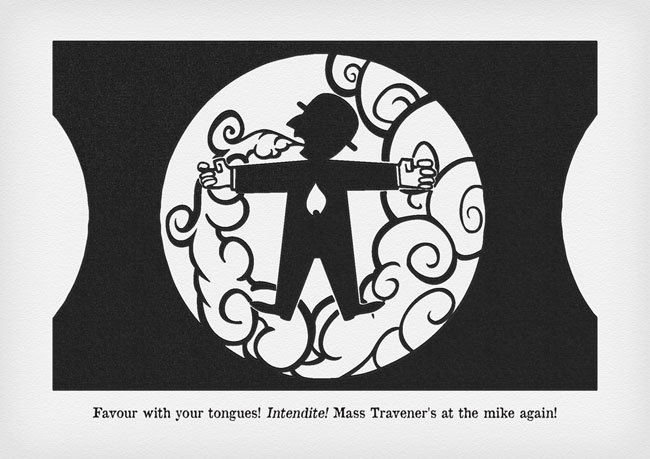
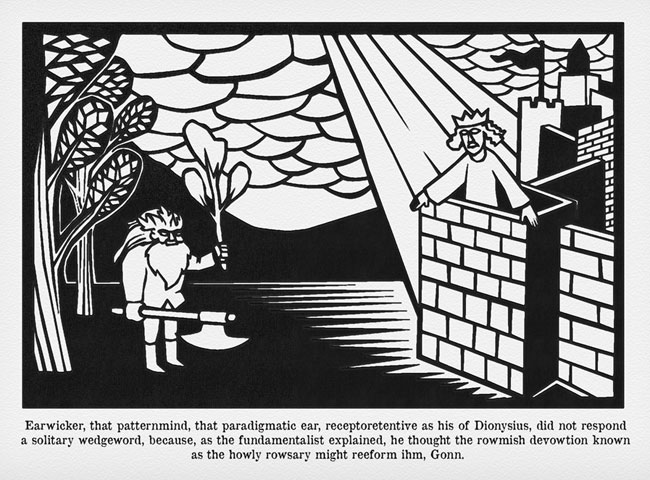
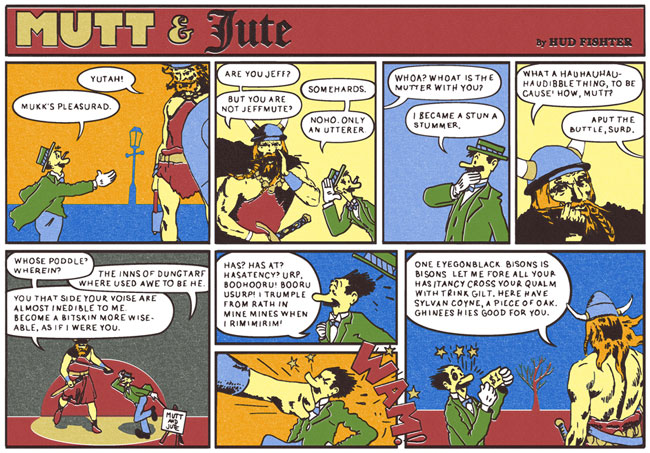
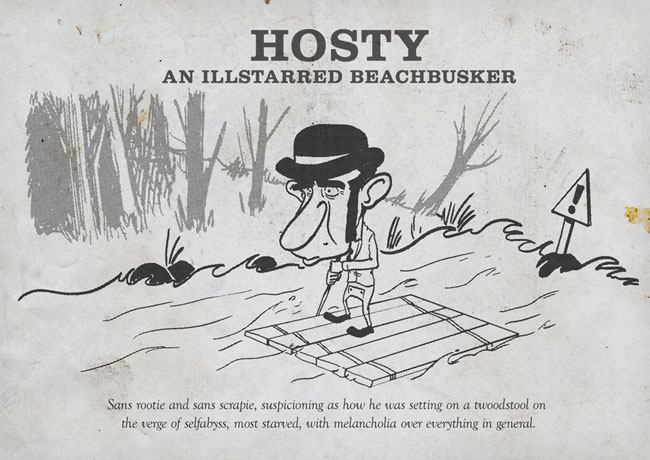
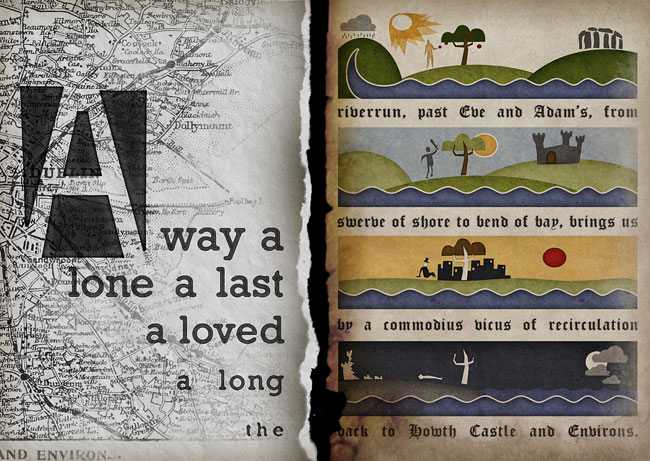
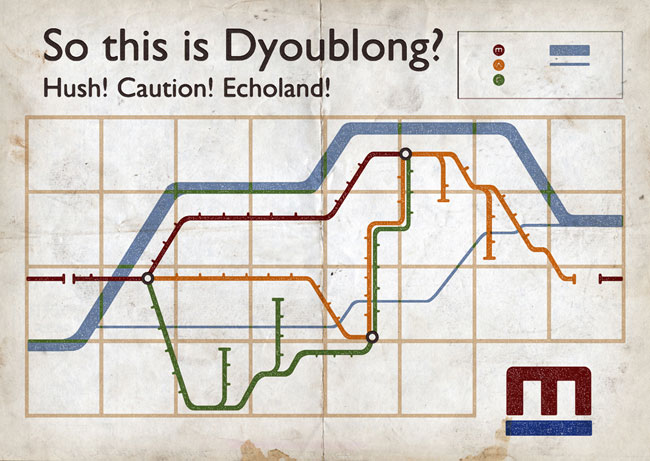
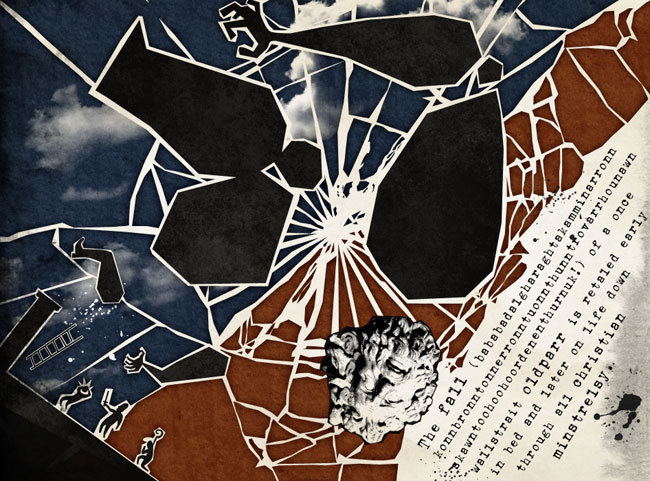
I first saw Stephen Crowe’s work at Shakespeare & Company, nestled above a refined selection of antique books with beautiful spines in the main room. The page I saw looked like the beginning of an illustrated Grimm’s story. I pointed it out to my friend Lauren – whispering, as there was a reading taking place – and she told me that it was an illustration of Finnegans Wake. Curious about his project, I contacted Crowe to find out more.

Stephen Crowe

1. Why are you illustrating Finnegans Wake? (Where did the interest/idea come from?)
Finnegans Wake might be the single most neglected book in history by a major writer. Which is understandable, of course. I won’t try to pretend that it isn’t a difficult book to read. But a sizeable portion of it isn’t a lot harder than most of Ulysses, for example. If you’ve ever read Chaucer or fiction in a second language, the reading experience is quite similar. It never washes over you. You always have to be working to understand it. Just because something is valuable doesn’t mean that it has to be appreciated by everyone on earth. But anyone with an interest in language and literature should at least read parts of it, because there’s no other book like it. It changes the way you think about reading. It forces you to think in unfamiliar ways about human nature, culture, history and religion. And it’s really very funny.

I first started illustrating Finnegans Wake because I wanted a drawing project that would challenge me and keep me motivated. I got the idea from seeing Zak Smith’s page-by-page illustrations of Gravity’s Rainbow. But his work, and the other projects of that kind that I’ve seen, are inspired by their subjects but not subordinate to them. They don’t try to explain the books they illustrate, which don’t really require that level of explanation in any case. I thought that illustrating Finnegans Wake would be an interesting way to make a difficult book approachable to a wide audience.

Stephen Crowe

2. What is your background in art and/or literature?
Growing up, I was very sensitive to what I saw as pretension and elitism. In high school I rejected Ulysses after about two pages. I wanted to work in animation. For me, Dangermouse represented the apex of western culture. But ironically, to study animation you first have to study art, the nuclear dumping ground where all the deadliest pretension can be isolated from society. I was kicked out of my art A-level after a year, because I used to argue with the teacher all the time about conceptual art.

So I studied film and literature instead. At first the literature was just a sop to justify studying film, but it turns that film studies is an utterly pointless subject, and I dropped it to avoid having to do any more phallus-spotting. By the time I graduated, I’d read Ulysses three times. I don’t really worry about cultural elitism anymore, although I’m still very sensitive to pretension, which puts me in a pretty difficult position with this project.

Stephen Crowe

3. What do you see as the relationship between images and text in a project like this?
My hope is that they are mutually supportive, though not generally in a literal way. Because my aim is to both represent the text and to illuminate it, I’m not interested in producing images that are completely opaque, but I can’t just draw what’s described in the text either. Mostly that’s not even possible, because it’s too abstract or contradictory. But even when the text contains a straightforward visual description, I’ve found that trying to copy it almost always results in disaster. I made this mistake a few times when I was starting out.

What I try to do now is to look for visual metaphors for the ideas and events in the text. I give myself a lot of leeway to interpret it in a visually interesting way, so in many cases the illustration might not be a lot clearer than the text, but taken together, they should illuminate each other. I try to produce designs with at least one aspect of immediate visual interest, and I try never to draw anything that can’t be at least partially understood without explanation. If you need footnotes to understand it, then you may as well just read the book.

Stephen Crowe

Stephen Crowe

Stephen Crowe

Stephen Crowe


More on Stephen’s blog: http://wakeinprogress.blogspot.com

{ 1 comment }

A Conversation-Interview between Cara Spooner and Lendl Barcelos

For me, everything comes from the body. I have an embodied practice. Because I have a dance background, everything I do – whether it is sending mail to people in Zürich, walking or “performing as an audience” – is all dance. Everything I do is movement-based and comes from the body.

Breathe deeply

Cara Spooner studied dance at York University. She works as a dancer, choreographer, designer and curator in various constellations and partnerships. Many of her projects are interventions, performance/installations, maps or site-specific performances.

Lendl Barcelos is an active artist, philosopher, and composer. He recently moved to Paris from Toronto in order to continue pursuing the intersections of these three fields.

Lendl and Cara first met in Toronto and this conversation happened in a rooftop garret in the 9th arrondissment of Paris after several months of corresponding though email.

Lendl: Cara.

Cara: Lendl.

L: Both…

C: Talking…

[they laugh]

play-play-play

L: What are you doing in Europe?

C: I’m doing research on how place affects things; on site-specific performance and on ideas (concerning performance).

L: A lot of your work is site-specific. What brings you to work within this realm as opposed to stage-based work?

C: I think that the social codes of being in a theatre have an interesting dynamic. When you walk into a theatre, there is a predetermined way of viewing, of hearing and of acting as an audience member. Especially if the work is movement-based, the way the audience understands it is primarily visual (but also aural). That’s a really great tradition but, in a way, I think there is potential for a lot more. I think that the audience’s embodiment can become more integrated into performance and that the different senses can become more integrated. That’s what motivates me to pull things out of the proscenium stage. I want to make the experience something more than just consuming with just the eyeballs and allow the affect to be integrated into the work with a lot of embodiment on the audience’s side.

L: In the piece 8037 that you are performing in Zürich next week, you are transforming the audience as a part of the piece. Can you speak of this piece in relation to your conceptions of site-specificity you just elaborated on?

C: This piece comes from the idea of “audiencing,” or performing as the audience.

The first component of 8037 is a mail-art campaign which is localized to a specific postal code region. Everyone within that region will receive an invitation in the mail signed from the River—a sort of anonymous entity, yet very integral to the lives of the people there. I’m sure they all have relationships with the river. Also, water is an interesting thing. It is outside of us, as well as inside of us. They will receive an invitation to perform on a particular day. Intentionally, what is being performed, how it is being performed, and when—to a certain degree—is left up to the recipient. So each citizen who receives the piece of mail is being questioned about “performativity” within their everyday life (about what, how, and when they’re performing). This is when the performance begins, with the reading of the the invitation. That awareness of performativity is in itself a performance.

The second component is a performance walk with patrons of the stromereien 11 festival. We take them on a walk through the postal code region where we have delivered the mail. After the patrons will be a “travelling audience” and we will prime them so that they will be ready to receive performance in any and every way. We are working with the idea that the frame and the action is actually occurring within the audience members. So if we walk past a dog pissing on a tree, we view that as the performance.

Notice what you notice

That’s the switch or the lens that we are attempting to see everything through. Or, if we see a woman gardening who threw her invitation away, or chose to ignore it, we still view her as if she is doing this “act of gardening” with intention. The way that we are framing this is: people are always performing. She is performing her gender, certain physical tasks, yet she isn’t thinking of this as performance. Her awareness isn’t on her performativity. This is why we as the audience are actually the real performers.

Of course, someone could also be on their front porch playing a song on their tuba because they have been prepped [with the invitation] and that is how they view performance: as an audience witnessing intentional performative actions.

L: So in this project you are charging the space on multiple levels: with the first step, you charge it anonymously or as the Limmat River, which creates a space for the embodiment of a “performer” in the traditional sense; in the second step, you charge the space of an “audience member”, which interestingly is the part that is signed by you and your collaborator, Sky Fairchild Waller.

C: It is this second step [the walk] that is in the festival program as our “performance” for the festival. It is this action of performing “as audience” and “as witness” that the audience participates in.

L: You have a concept of the “greater choreography”, can you explain what this means?

C: We can use the frame of a stage or gallery and say that everything that happens within this frame is the “Art”, but what if we extend this frame so that everything in the entire theatre is seen as the performative act, or everything in the building, the block or the city. It is about the ways which the city and architecture defines movement and the choices that are made.

When I was first doing movement maps and tracking all of my movement (pedestrian, dancing, otherwise), I noticed the traces that were left were a lot of straight lines because of where I live (which is an urban centre). Interestingly this is what ends up defining many of my movements.

time spending map

L: So the actual geography influences your movement?

C: Yes, of course, where I move, how quickly I move, when I move, where I stop, what is delineated as private or public space and my roles within these places, as well as the social codes that are “okay” or are “not okay” in those places.

L: So then does psychogeography play a big role in this?

C: Yes, of course! And what about you? How does psychogeography, or this idea of “greater choreography” play a role in relation to the walking you’ve been doing?


L: Ever since I moved to Paris walking has been my main mode of transportation. Paris is fairly small, it’s only about 10×10 kilometres. At first, when I wasn’t used to the city at all, everywhere I went I felt the same, exactly the same. You know, there’s a prominence of Haussmann-style buildings and streets. Everything is somewhat imposing with very large and directed spaces. It’s a type of all-paths-lead-to-Rome style of urban planning. But, slowly but surely, I noticed that there were areas that were more convoluted. Areas inviting you to get lost. Even when I was familiar with an area, I would still be able to get lost and so I did.

I took the approach fairly intuitively as far as trying to embody the psychogeographical tradition of just going for it and not necessarily theorizing about it. I agree that the environment definitely conditioned how I was moving and where I was moving to, choosing paths for me.

____________________

C: I dream of walking pure North or pure whatever.

L: Through buildings and everything? As straight as possible?

C: Yeah, as much as possible, stay true to walking in an actual straight line.

L: What would you do when you came across an obstacle?

C: Well that is precisely the game! Is it something you can climb over or is it a huge building? Do you go through it, or scale up the side of it and go over parkour-style? What would happen? That’s the invitation. That’s the question! I’d love to defy these predetermined paths which shape how we move in terms of the greater choreography.

lay down

{ 0 comments }

With Wonder and Astonishment

by HRM on September 5, 2011

Interview with Badaude, by Harriet Alida Lye

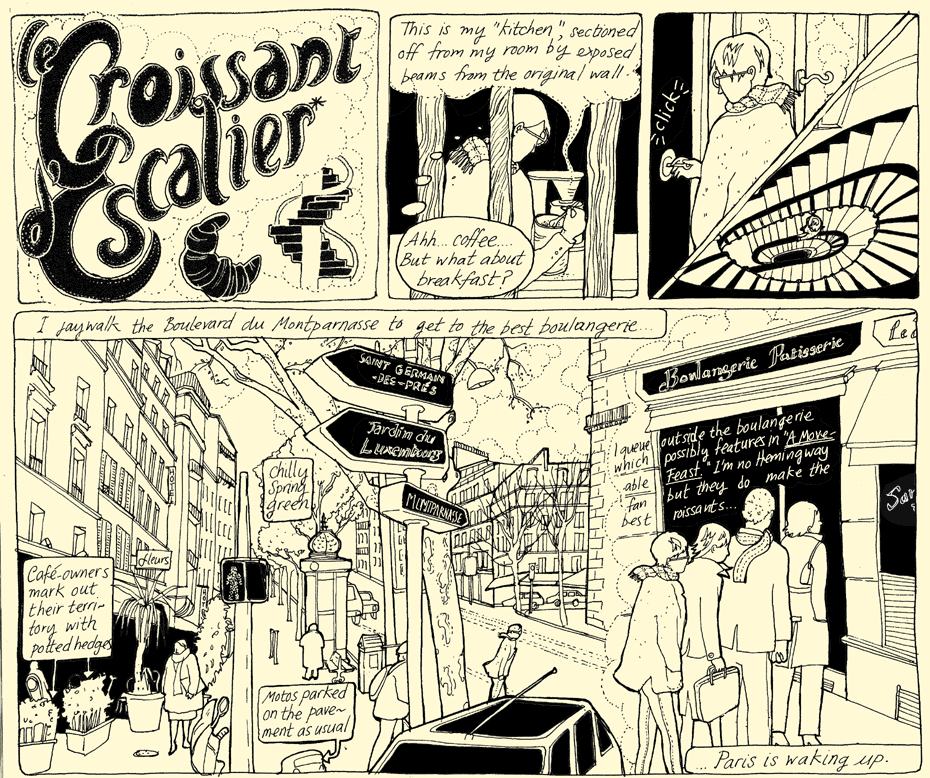
Badaude – (ba’daude; nf): a person given to idle observation of everything with wonder or astonishment; a credulous or gossipy idler – describes herself as a “writer with pictures”. I met Badaude (otherwise known as Joanna Walsh) for the first time in the gardens of the Musée Zadkine in Paris. We sat side by side talking for a while before going in to see the exhibition, and I noticed the way her eyes roved around, touching upon each component of my outfit, the garden, the other people around. I sensed that she was gleaning material, observing everything – eyes not idle, but alert.

Croissant Escalier

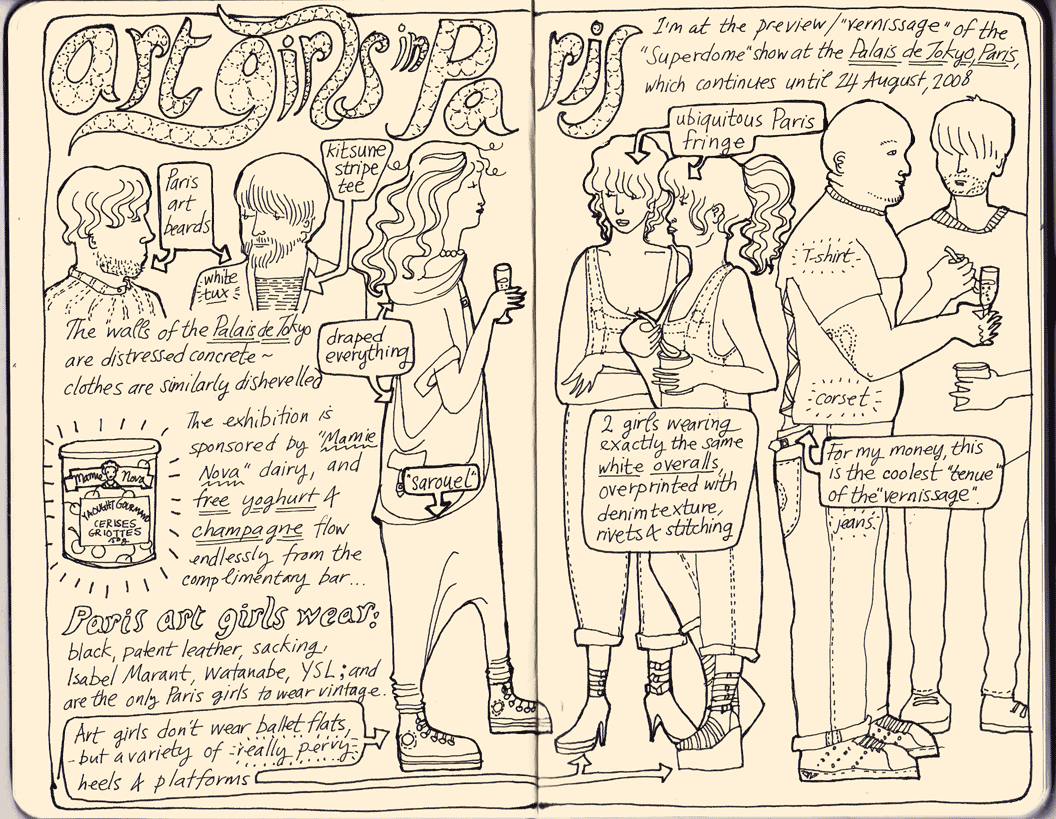
The cover of Her Royal Majesty #11 is designed and illustrated by Badaude, but you’ll see that for yourselves when the time comes. Badaude’s work has appeared internationally in (amongst others) The Guardian, The Telegraph, The Independent, The Economist, Bomb Magazine, The New York Times, World of Interiors and the Wall Street Journal. She is a regular contributor to The Idler Magazine and is Psychogeography Mistress at the Idler Academy. She writes and draws a weekly column for The Times. She is based in Oxford, UK.

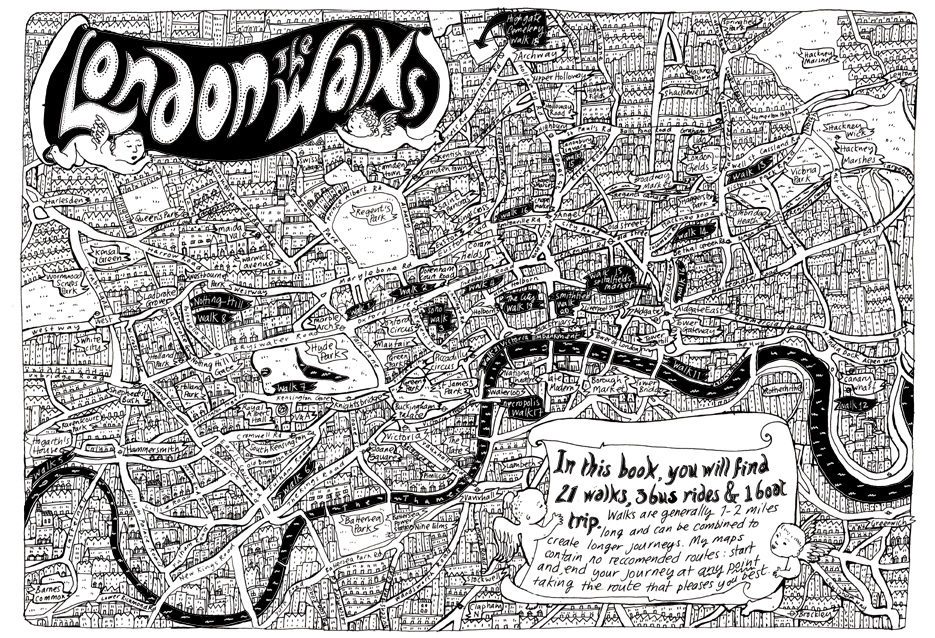
Her latest book, London Walks, is available from independent bookshops such as Foyles, Shakespeare & Company, and online.

Art Girls in Paris

How would you describe your job? What was your path to get to where you are now?
For years I resisted becoming an illustrator: at school art was looked on as a second-tier lesson for students who couldn’t cope with ‘academic’ subjects. I did an English degree and doodled during lectures. I don’t regret it because reading and writing are at the heart of what I do.

I still shrink a bit from being called an artist. I think it’s because what I’m really interested in is narratives and how they work: I’d describe myself as a writer with pictures.

What are the things you spend the most time doing every day?
Drawing; writing and, I won’t say cooking, but making often odd food combinations from what is in the fridge; drinking coffee; drinking wine; reading. When I’m drawing I listen to spotify or librivox.org. When I’m writing I don’t listen to anything. My last book was about walking but when I go for a walk I usually walk for most of the day so I won’t include that as an everyday activity.

London Walks

In your work, the text and images have a very mutualistic relationship. How does the page evolve in your mind, and on the page?
Some pages spring up more or less fully formed. Of course others don’t but I usually know either something I want to draw or something I want to say and work from there. By the time I’m ready to do the final drawing I know almost everything I’d like to say but I don’t like to rough things out too fully or the final drawing lacks spontaneity.

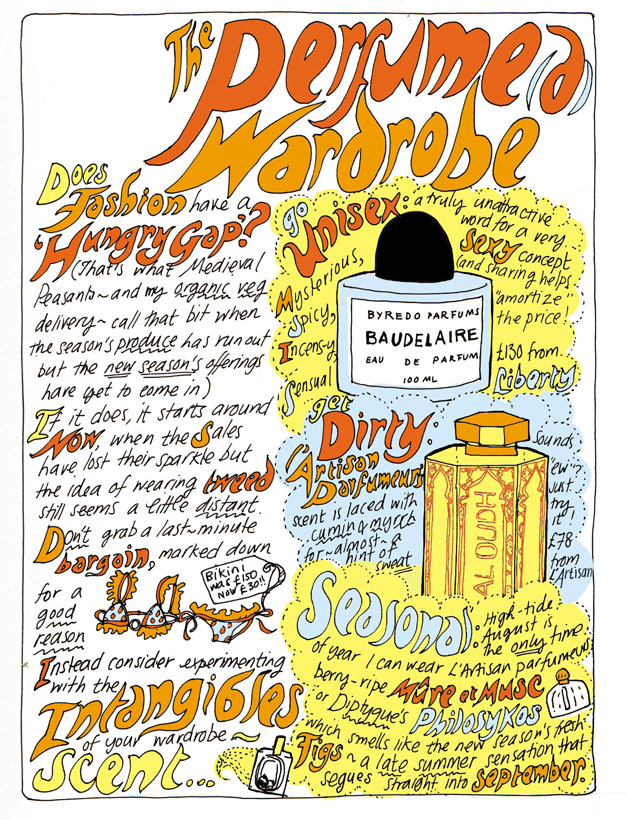
Perfumed WardrobeWhat draws you to your subject matter?
Probably paradox. Like most people I notice what strikes me as unusual. I write and draw a weekly piece about fashion for The Times newspaper (UK) and what fascinates me is not the perfection of the catwalk presentation but the way people I see in the street combine different elements of fashion: sometimes surprisingly elegantly, sometimes not, which can be even more interesting.

What are you inspired by right now?
OuLiPo. I got interested in OuBaPo – the Ouvroir de Bande Dessinée Potentielle – but I’m not sure I’ve yet seen a really engaging restriction that works simultaneously with both text and visuals but I’m determined to work on this in my next substantial piece. I just read Perec’s Tentative d’Epuisement d’un Lieu Parisien and immediately wanted to reinterpret it using pictures.

Read Badaude’s blog: www.badaude.typepad.com

Follow her Twitter: twitter.com/#!/badaude

{ 0 comments }

The Social Archivist

by HRM on August 24, 2011

Continuous line drawings by Brit Bachmann

Brit Bachmann, 22 year-old from British Columbia, moved to Paris in 2010 for an exchange at l’École Nationale Supérieure des Beaux Arts. It was in Paris that she began visually documenting her quotidian experiences in accordion notebooks. Coffee grains get taped down in notebooks, receipts are kept, consumptions documented. In the spirit of her Situationist predecessors, she progressed to imposing protocols and limitations on her drawings. These protocols include “The documentation of my approximately 63 purchases (excluding perishables) between 21/09/10 and 09/12/10,” and “Twelve minutes in front of Venus de Milo at the Louvre, 19/01/11.”

Currently interested in motion, Brit records candid videos of daily scenes around Paris and uses the footage to explore people’s movements, using one continuous line that threads through the entire image. A social archivist, Brit’s drawings capture often intimate moments in time through her keen sense of observation.

Brit Bachmann - 90 Seconds

Brit Bachmann - Clipping nails

Brit Photo Small

More on Brit’s blog: bbyear.tumblr.com

Twitter: @britbachmann.

{ 0 comments }

ISSN: 2116 34X