Drawings by Grant Creegan
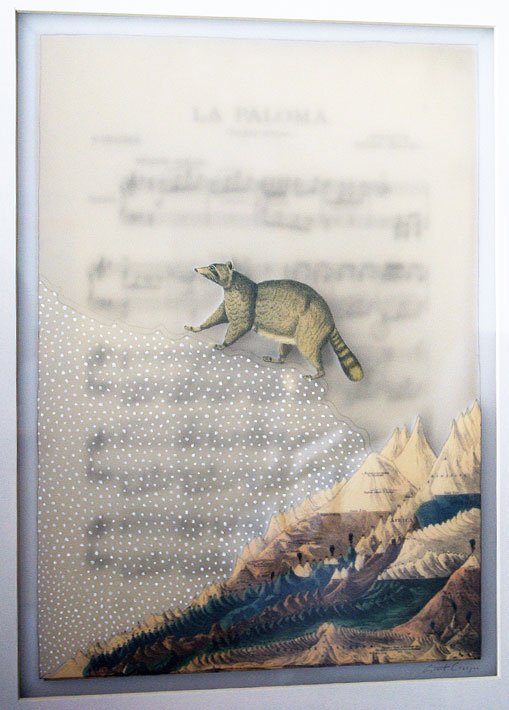
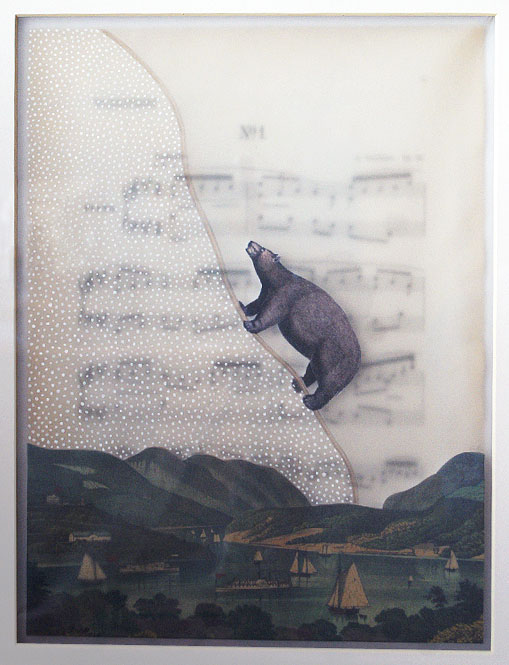
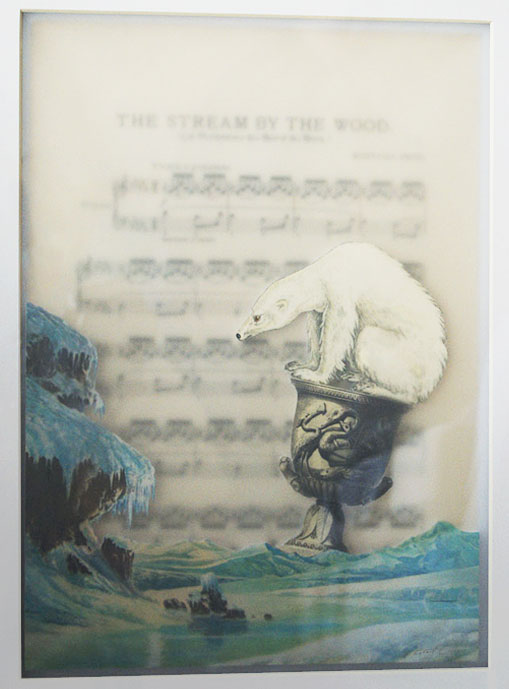
Surfaces of painted dots and pencil drawing on tracing paper suspended over mixed media prints and backgrounds of archival sheet music. On display at Edinburgh’s Lyceum until the end of December.
{ 0 comments }
Surfaces of painted dots and pencil drawing on tracing paper suspended over mixed media prints and backgrounds of archival sheet music. On display at Edinburgh’s Lyceum until the end of December.
{ 0 comments }
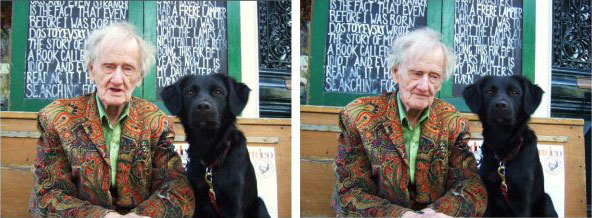
When I found out that George Whitman had died (peacefully, in his bed above the bookshop he founded in 1951) I started writing a list of all the people I met at or through Shakespeare & Company who have changed my life in some way, however big or small. I stopped when I reached thirty, but could have continued. Poets, pianists, physicians, people figuring it out. People from England, Sweden, Australia, Korea, my hometown.
George created a place where people could come, sleep, sit, read, talk, listen, share, be. By his own estimate, he lodged some 40,000 people. As Mr. Whitman put it, “I wanted a bookstore because the book business is the business of life.”
Though I never slept there, I did work there for a time and the experience – the community – changed the shape of my life. And the magical thing is: it did (and does) for everyone. Looking through the Tumbleweed diaries, the piles and piles of scrapbooks and loose pages with passport-photographs and histories and dreams, you start to get a sense of all of the individuals in this community. The web that George has created now extends all over the world, and all of the people who have passed through – as well as, of course, those who have stayed and continue to build his living legacy – are linked through this.
Once, up in his apartment, he offered me lemonade – he was always making iced tea, hot tea, pancakes, Irish stew, coffee; making people feel welcome in his home – and said that this lemonade was made with fresh lime blossoms. I sipped, surprised. “Really? Where do you find fresh lime blossoms in Paris?” He continued tinkering with the sugar levels and said, quietly, as though divulging a secret, “no, it’s not really made with lime blossoms. It just sounds more poetic that way.”
I would like to thank George for creating this space – and thank all of the people who continue to run this place and make it grow: Sylvia, David, Jemma, Hilary, Linda, Terry, Thomas, and everyone else over the years – that has allowed all of us to find and believe in the poetry of our daily lives.
– Harriet Alida Lye
{ 0 comments }
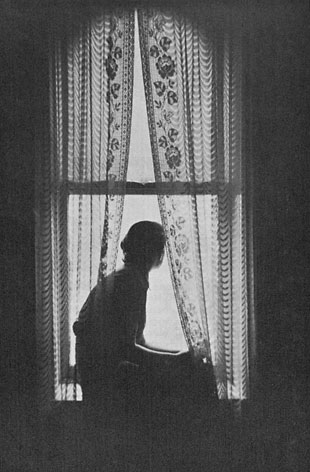 Until we’ve had our own experiences of them, the spirits of unknown places only exist in our minds, fed to us in distant reports from the field, and built in great part upon the stuff of film and literature. Those who go out in search of the fantasy often arrive at something very different from the dream, discovering a reality less fantastic or more so.
In many ways, Paris is one of the ultimate fantasy cities, a real place that continues to be endlessly imagined—filmed, painted, written about, idolized and longed for, by those who don’t know it and those who do. “What if we were like Gene Kelly in An American in Paris, and danced along the Seine,” remarks Audrey Hepburn as Regina in Charade, walking with Cary Grant along the river and musing over a Paris from the movies before her time, imagining still, despite the fact of already being in the real place she has dreamed of. As a city that remains immortally picturesque, Paris has a habit of presenting itself as a landscape of dream, in which the line between the place itself and our idea of it is easily confused. But whether our visions prove true or false when we finally encounter it’s varied realities, places like Paris, and the actual happening of any real adventure, are still propelled by the dreams that drive us to go searching for them in the first place.
Zazie in the Métro (from which this column takes its name), is a film about a young girl’s longed for adventure in a legendary place—that place being none other than our city in question. It opens and closes with the same image, a train on its way to and from Paris, passing the drab suburbs surrounding the city, the sound of a child whistling sadly in the background. Zazie’s fantasy is to go to Paris and ride the Métro, but when she arrives, the trains are on strike, and the dream is foiled by the reality of the thing imagined. Here, many would turn back and exit the picture, but Zazie has the courage to improvise with the circumstances and by this, stumbles upon the real adventure, a surrealist satire played out on foot, revealing Paris as a movable world that changes colors and shapes, in which all mundane things are only sped through in fast forward.
Most of the time, Paris is as enchanting as depicted in film, at least by the looks of it. The beauty of its surface is nearly impenetrable, which, in turn, can serve as a blessing and a curse. The mystery of dreams is what lies beyond them. Paris, like most beauties, be they cities or people, still exists as a gallery of changing faces, some proving hideous in certain light. This isn’t to say that it isn’t fantastic, that films don’t tell the truth, or that we shouldn’t have fantasies. Only that our fantasies aren’t always realized the way we imagined them, and sometimes the result is something much more fantastic. One wonders what might have happened if the trains had been running. Perhaps Zazie might never have discovered Paris. Perhaps the entire film might have been skipped over in fast forward, only another mundane segment in the life of any person, repeating in cycles that blend into each other through the day, in passages beneath a city that goes unseen. At the end of her two days in town, Zazie does get to ride the Métro, only she never knows it, having fallen dead asleep on her uncle’s shoulder, exhausted from her adventure of Paris above ground.
As for those who came before us, the myths that help fuel our reasons for coming here, there remains a fact only learned by chasing their shadows: we cannot possess someone else’s legend, but we can perpetuate legends of our own. Whether we stay in the dream or return to our old worlds, the point is to have made the attempt at knowing the real thing, whatever reality is manifested. Our real adventure may fall upon us when we least expect it, as happened with Zazie and many girls after her, some who have grown into young women on their last rides through town.
*
It was after midnight already. The train stopped several times on its way through the tunnel, halting for the misfits stumbling onto the tracks, drunk or amorous, fallen from the platform, slow dancing in the howl of the head lights growing closer in the dark. Paris had become a zoo, as it did three or four nights a year, nights for the trains to keep running through the sunrise, as the fête carried on in echoes across town, resounding in the distance until the city seemed endless. The red eyes of the passengers spread through the Métros, as if there was some outbreak of disease rampant among them. But they were only faces painted with intoxication, Dionysians who’d been swimming naked in the river, drinking from each other’s glasses, dancing through rooms of smoke.
Sometimes people stare at each other for no reason. One notices and can’t decipher what the other is struck by. In New York the women look each other up and down, inspecting each other’s outfits, as ruthlessly as ogling men might gawk at their bodies. It wasn’t difficult to stand out in Paris. The girls were pretty. The lipstick was red. The crazy people clung to the alcoves and passageways, rarely so displayed in the light as they were in the open insanity of American cities. Paris was a place long settled in its identity, embedded in stunning miles of ancient buildings that were all the same color, housing a culture not easily changed. Some days, the beauty was monotonous, some days empty, always magnificent. But here, on this night, on this train, in this city, the young woman by the door just let the others look at her, imagining herself on the brink of an evening that would end like all the rest, to climb the creaking steps to her little upstairs room.
It was difficult to say where she’d been. By the looks of her, she was the sort to go walking alone, maneuvering slowly through the crowd in her delicate dress, a thin forties wrap with black lilies patterned across it. One could see her now, gazing upward as she went, dragged by the faint music drifting from the windows, pressing past the masses spilling onto the street from the bars and cafés, a sea of mustaches and drunkards. Everywhere around her came a cacophony of togetherness, but all she could hear was the clop of her own footsteps, knowing they were to be her last in this town. The lights had just gone out in all the children’s bedrooms; the stray animals had begun limping through the dark. She could feel the streets dissolve and move in on her, pushing themselves into the vaults of her memory. But perhaps she hadn’t been anywhere at all. Perhaps she had only spent the night waiting, as she did most nights, paralyzed with the sad yellow light that blinks inside people who live alone in rooms.
Occasionally the train ran for a stretch above ground. The young woman leaned her head against the door, habitually twisting her fingers in a lock of black hair, moving the pendant on her necklace back and forth across her chest. She looked out the window at the glowing city, almost comically forlorn, completely oblivious that later that night, she would be swept off by pagans— to dance until daylight and make love to a dark skinned man in strange hotel room in the early morning. The long exposure of people spun in a blur around her, and it was if she were still at the center of the photograph, the only thing in focus.
{ 0 comments }
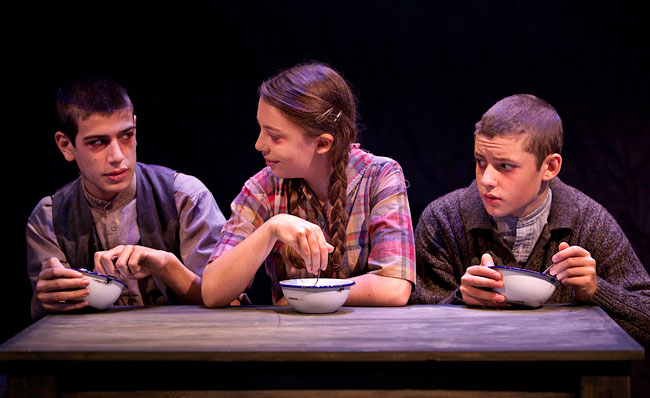
The Children’s Republic, Canadian playwright Hannah Moskovitch’s brilliant new play currently on at the Tarragon Theatre, starts with an important deception. The scene is dark, the walls are black paper, and there is white powdered chalk spelling out WARSAW 1942 on the ground. The lights open on a crying boy. He is on the streets, sobbing sincerely, begging for money to replace that which he’s lost – his father’s, he says. The hems of his trousers have been let down, his face is shadowy. A well-dressed man approaches, takes off his hat and swiftly calls the boy on his ‘act’. “This, this asking for people to give you money back for your father’s, this works for you? Your father is dead, right?”
The boy is silenced. The boy follows the man. His father is dead, it’s true; the boy is an orphan. We learn the man is Janus Korczak (Peter Hutt) and he is taking the boy, Israel (Mark Correia), to his orphanage.
The character of Korczak is based on a real person, someone who did command great authority and great respect. A famous Jewish-Polish author and pediatrician, he was instrumental in advocating for and drafting up the Declaration of Children’s Rights. The Declaration he envisaged — not a plea for good will but a demand for action — was left uncompleted at the time of his death. He founded an orphanage in the centre of Warsaw and ran it from 1912 to 1942. The orphanage operated as a sort of republic: children were given their own small parliament, court and newspaper. In 1942 it became agglomerated in the Warsaw ghetto and, in August of that year, was closed down by the Nazis.
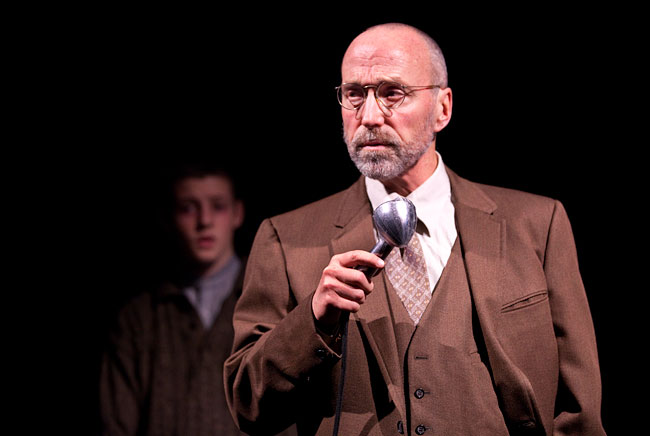
“We wanted to make a play that Korczak himself would have come to,” explained Moskovitch in an interview after the show, looking directly at me with a calm, unwavering gaze. “We wanted to make something where the children would be at the centre of it.”
The magic of The Children’s Republic takes a while to envelop you but as soon as it does, about ten minutes in, the story is riveting, all-consuming, heart-breaking. Under Alisa Palmer’s strong direction, the actors – three adults and four children – created a real and beautiful and tragic world, and I was utterly hypnotized.
At first, I must admit, I was mildly irritated by the children in this play. This was a problem, of course, for the children are at the heart of it all. My date agreed – we found ourselves judging what seemed like caricatures of archetypes: Mettye, the bossy, lispy girl (Katie Francis Cohen); Misha, the timid, trembling boy (Elliott Larson); Israel, the dark and rangy criminal-type; and Sara (Emma Burke-Kleinman), the taciturn violin prodigy. Then, I realized that children are just sometimes annoying. The way they sing the same dumb song over and over, the way they don’t talk when you want them to and won’t shut up when they should. The way they are trying hard to be themselves but are also trying to figure out what that self is. The children in this Republic feel betrayal and defiance, pride and fear, hatred and love. Often all at once. There was one moment when Mettye looked piercingly at the audience and her face had the fullness and depth of expression of a Balthus painting. The “essence of teen-age” is there: in real life, the actors range in age from 13 to 15.

Balthus - Thérèse Dreaming (1938)
“It was important that the roles of children be played by actual children,” Hannah Moskovitch told me, “because we wanted the play to formally do what the story describes. We wanted it to be an instrument of empowerment for children.” In order to make the lines feel realistic, Moskovitch rewrote the dialogue constantly, up until days before the dress rehearsal, listening closely to the children’s natural speech patterns and trying to imitate them to create natural dialogue.
The theme of freedom and entrapment is woven deftly throughout the script. Early on, Mettye says to Korczak “I think my bird likes its cage.” Later, he explains that the bird is wild. “It can’t belong to you, Mettye.” Reluctantly, she opens the cage, and with the sound of flapping wings we follow this sound-bird to its freedom.
The first half of the play ends with a fight: Israel, who follows no person’s rules, has broken Misha’s leg, knowing that Misha has rickets so his bones are very fragile. Misha lies crying on the ground, Israel runs away, and Mettye, having just been told by Israel that he “likes” her (yes, readers: he “like likes” her) runs in to to say that the radio announced that the Germans have invaded. I didn’t know what I cared about more: that poor Misha was laying there, wailing with a broken leg and Israel had ruptured the temporary beautiful calm in the orphanage, or that the Nazis had invaded Poland.
When the black paper walls are ripped to reveal the barbed wire and the scene closes in on itself, the bonds between the children only get stronger. They joke, cry, love. The ghetto is unsafe but Korczak has created a haven for his children. And it’s true: Moskovitch tells how Korczak “miraculously managed to keep all his [200] orphans alive, in spite of extreme deprivation and rampant illness.” Eventually, though, his children were deported to Treblinka. As a famous figure, recognized for his work by both the Poles and the Germans, Korczak was offered many opportunities to escape, but refused them all. He was no hero: the way he saw it, he had no other option but to stay with his children.
This is the Children’s Republic, and Korczak is the Philosopher King.
{ 0 comments }
Under the gilded ceilings and embossed marble of Le Carmen, hotel particulier South of the brashy neon-lights of Pigalle, Emma-Klara Sandberg (and François Chatal on the piano) practice their performance before the launch party of the 11th issue of Her Royal Majesty (1 November 2011).
This beautiful Swedish singer in pearls and polka-dots has a voice that soars and sears and a stirring sense of melody. Emma-Klara is part of Le Son du Metro, a collection of Parisian buskers – the record will be out in the new year.
(Look closely, and you’ll spot one of our favourite Paris-based artists, Mia Funk, touching up prints of her paintings)
{ 0 comments }